MeRT therapy is a personalized approach to transcranial magnetic stimulation, or TMS, that uses information about an individual’s brain activity to help determine treatment parameters. Rather than beginning with the same stimulation settings for everyone, the process incorporates electrophysiological measurements before treatment planning.
For people considering MeRT, it’s useful to separate how the technology works from whether it will help a particular condition or individual. This guide explains brain mapping, personalized treatment planning, neuromodulation, reassessment, and the questions worth discussing with a qualified healthcare professional before starting.
MeRT therapy begins by collecting information about brain activity before stimulation settings are selected. That information is analyzed and used alongside clinical assessment to help guide an individualized treatment plan.
In June 2026, the U.S. Food and Drug Administration cleared the MeRT System through the 510(k) pathway. Its documentation describes software that analyzes resting-state EEG and ECG information to calculate an individualized stimulation frequency for use with compatible TMS equipment.
The first step is determining whether MeRT is appropriate for you. A clinician may need to review your health history, current symptoms, medications, existing treatments, implanted devices, and other factors that can affect suitability or safety.
MeRT shouldn’t be assumed to suit every neurological, developmental, psychiatric, or cognitive concern. Eligibility, contraindications, possible risks, and treatment alternatives should be discussed with an appropriately qualified healthcare professional.
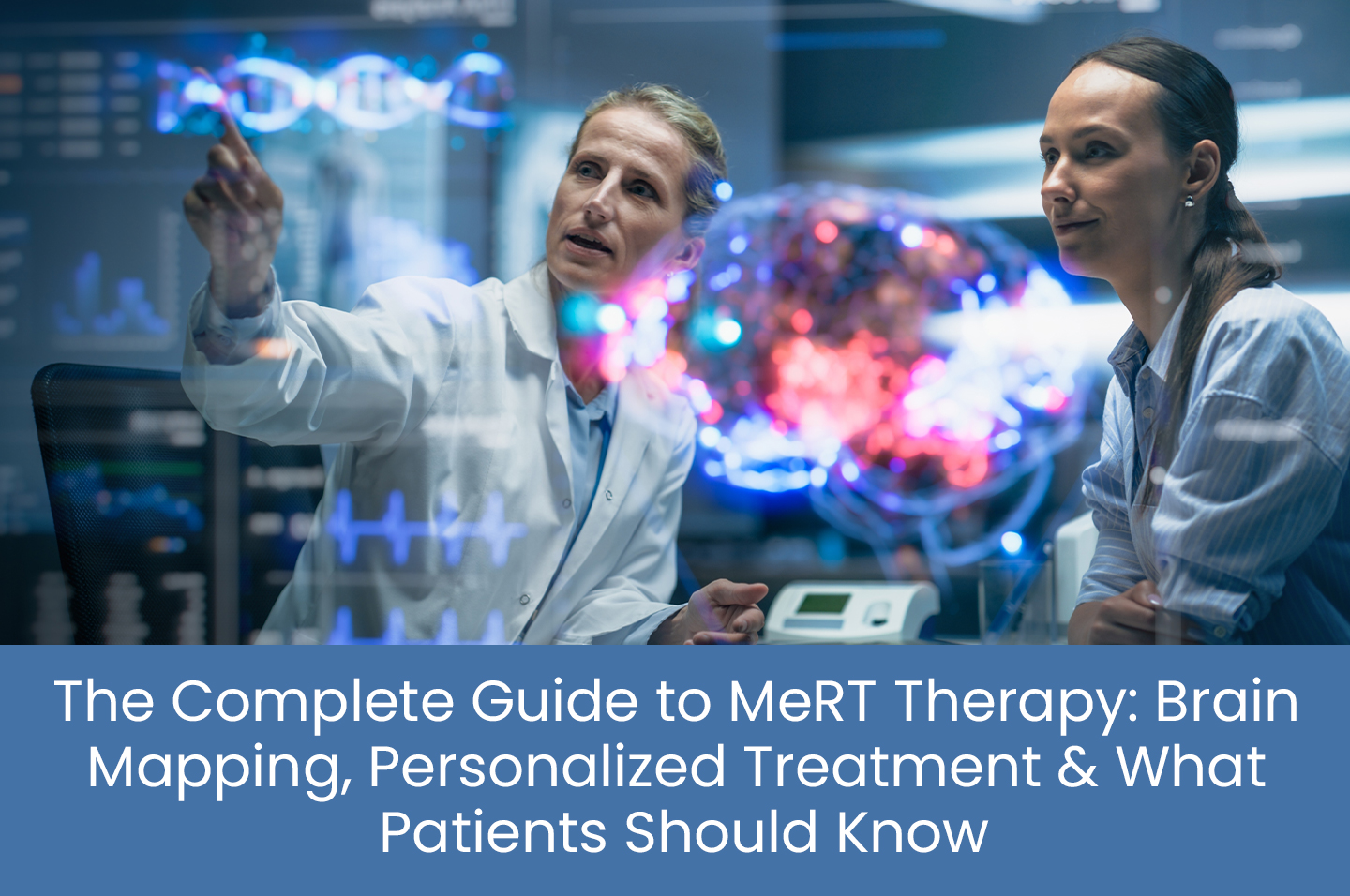
Brain mapping in this context uses electroencephalography, or EEG, to record electrical activity generated by the brain. NeuroSync’s process includes an initial brainwave recording, together with physiological information such as an EKG, which records the heart’s electrical activity.
The resulting measurements provide data that can be analyzed during treatment planning. They shouldn’t be treated as a standalone diagnosis or as proof of what is causing a particular symptom.
This also differs from structural imaging such as an MRI. EEG records patterns of electrical activity, while MRI is used to create images of physical structures.
Once the recording is complete, the collected data can be analyzed for information relevant to treatment settings. The goal is to use patient-specific measurements instead of relying entirely on one standardized stimulation frequency.
According to the FDA’s 2026 summary, the MeRT System software analyzes resting-state EEG and ECG data and calculates a recommended individualized pulse rate. The software does not diagnose or stimulate the brain on its own. Clinical interpretation and treatment decisions remain part of the process.
Information from the clinical assessment and brain mapping can then contribute to individualized treatment parameters.
“Personalized” is important to understand carefully. It means aspects of treatment are adapted using information collected from the individual. It does not mean the treatment is guaranteed to work better than a standard protocol.
Research on personalized TMS continues to develop. A 2025 systematic review and meta-analysis involving 10 randomized active-controlled trials and 647 participants found no evidence that personalized rTMS was superior overall to fixed rTMS for major depressive disorder.
Before beginning treatment, ask which parameters are being individualized and how the available data influenced those decisions.
Neuromodulation refers to using stimulation to influence activity within the nervous system. With MeRT, magnetic stimulation is delivered externally through compatible TMS equipment rather than through surgically implanted electrodes.
The FDA documentation distinguishes the MeRT analysis software from the TMS device itself. The software provides individualized treatment parameters, while compatible TMS equipment delivers the magnetic stimulation.
What treatment feels like and what side effects may occur can vary. Your clinician should explain expected sensations, safety considerations, contraindications, and possible adverse effects before treatment begins.
Treatment monitoring may include changes in symptoms, your experience during sessions, tolerability, and other clinically relevant information.
Tell your treatment team about new symptoms, side effects, medication changes, or other significant health changes during the course of care. Monitoring gives clinicians information they can use when deciding whether the existing plan remains appropriate.
There shouldn’t be an assumption that a particular change will happen after a predetermined number of sessions. Individual experiences and outcomes vary.
Personalized care may also involve reassessment. NeuroSync emphasizes repeated measurement as part of understanding how an individual’s brain activity changes during treatment.
The timing and purpose of reassessment can depend on the treatment plan. Any changes to stimulation parameters should be determined through appropriate clinical judgment rather than adjusted independently by the person receiving treatment.
Before starting, ask how progress will be evaluated and what circumstances might lead the treatment team to review or change the plan.
MeRT sits within a developing area of personalized neuromodulation, and the strength of evidence varies by condition, protocol, and outcome.
It helps to consider three separate questions. First, what regulatory authorization does the underlying device or system have? Second, what evidence supports the specific personalized protocol being proposed? Third, is the intended use authorized in the jurisdiction where you’re receiving treatment?
The U.S. FDA granted 510(k) clearance to the MeRT System on June 3, 2026. Canadian readers shouldn’t assume that U.S. clearance establishes the Canadian regulatory status of a particular device or use. Ask the provider which equipment will be used and about its regulatory status in Canada.
Research also doesn’t currently establish that individualized TMS protocols are universally superior to standard approaches. Discuss expected benefits, known risks, alternatives, treatment duration, costs, and evidence for your specific reason for seeking treatment with a qualified clinician.
Before committing to treatment, ask who evaluates your suitability and what clinical assessment takes place. Find out what type of brain mapping is used, what the results can and cannot show, and how those findings affect the proposed treatment settings.
You can also ask which TMS device will deliver treatment, its regulatory status in Canada, and whether your proposed use is authorized or off-label where applicable. Questions about contraindications, possible side effects, alternatives, expected treatment course, follow-up, and how progress will be measured are equally relevant.
Most importantly, ask what evidence supports MeRT therapy for the specific condition or concern you’re seeking help with rather than relying on broad claims about brain health.
Understanding brain mapping, individualized treatment parameters, neuromodulation, the current evidence, and your own suitability can help you make a more informed decision about MeRT therapy. NeuroSync Brain Treatment Centre uses brainwave-based assessment and personalized treatment planning as part of its approach, but individual outcomes can vary.
Learn more about NeuroSync Brain Treatment Centre’s services or discuss whether an assessment may be appropriate for your circumstances.
Reach out to NeuroSync Brain Treatment Centre today at 905-758-9885, email us at neurosyncbtc@outlook.com or click here to get in touch online.
MeRT is used to refer to Magnetic e-Resonance Therapy. It describes a personalized approach related to TMS in which electrophysiological information is used to help determine stimulation parameters. The name itself doesn’t establish whether the treatment is appropriate or effective for any particular individual or condition.
Brain mapping involves recording electrical brain activity using EEG-based measurements. The resulting data can contribute to individualized treatment planning, but it shouldn’t be considered a definitive diagnosis of a neurological or psychiatric condition on its own.
MeRT incorporates patient-specific electrophysiological data when deriving certain stimulation parameters. Conventional TMS protocols may instead use standardized parameters depending on the device and indication. Personalized treatment does not automatically produce better clinical outcomes, and research comparing individualized and fixed approaches remains ongoing.
Yes. Magnetic stimulation is delivered externally and doesn’t require surgically implanted electrodes. However, non-invasive doesn’t mean risk-free. Possible side effects, contraindications, and individual safety considerations should be reviewed with a qualified clinician.
Suitability depends on your health history, reason for seeking treatment, treatment goals, possible contraindications, available evidence, and clinical assessment. Ask about the evidence for your specific concern and what alternative approaches are available. An online guide cannot determine whether MeRT is appropriate for an individual.