
• Home
  • About Us
  • Services
    • MeRT For Depression
    • MeRT For Brain Trauma
    • rTMS Therapy
    • Direct IV Ozone Treatment
    • Ozone Therapy
  • Autism
  • About MERT
  • How It Works
  • Blogs
  • 905-758-9885
  • Get Started
Request for a call today

Services are NOT covered by OHIP or Insurance. Funding is available through Ontario Autism Program

Autism Therapy Vaughan - Neurosync Brain Treatment Centre
  • Home
  • About Us
  • Services
    • MeRT For Depression
    • MeRT For Brain Trauma
    • rTMS Therapy
    • Direct IV Ozone Treatment
    • Ozone Therapy
  • Autism
  • About MERT
  • How It Works
  • Blogs
  • 905-758-9885
  • Get Started

rTMS Therapy at Neurosync Brain Treatment Centre

Get Started

rTMS Therapy at Neurosync Brain Treatment Centre

At Neurosync Brain Treatment Centre, we believe that everyone deserves a life unburdened by the challenges of mental and neurological conditions. That’s why we proudly offer rTMS Therapy (Repetitive Transcranial Magnetic Stimulation)—a groundbreaking, non-invasive treatment designed to restore balance to brain function and bring hope to those struggling with conditions like depression, anxiety, PTSD, and more.

Life’s complexities can leave many feeling trapped in cycles of mental or neurological distress, but rTMS Therapy provides a path to healing by gently stimulating targeted areas of the brain to improve its functioning. With our compassionate care, state-of-the-art technology, and personalized treatment plans, we are dedicated to empowering individuals on their journey to recovery. 

When you choose Neurosync, you’re choosing a team that prioritizes your well-being, understanding that every brain is as unique as the individual it belongs to.
Book an Appointment

Understanding rTMS Therapy

How Does rTMS Work?

rTMS Therapy Vaughan

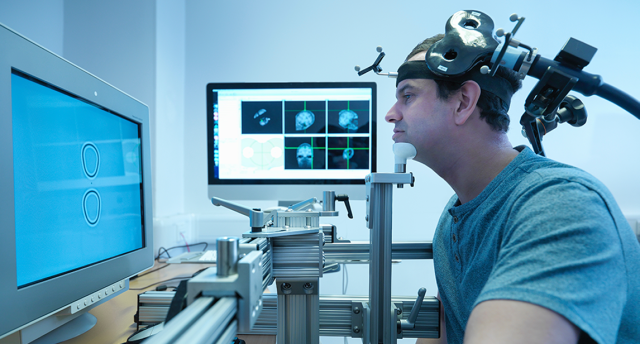
Our brains provide a complex network of neurons which communicate through electrical impulses. rTMS works by modifying electrical activity through delivered electromagnetic impulses and can influence the functioning of specified brain regions.

Repetitive Transcranial Magnetic Stimulation is a noninvasive technique that uses magnetic impulses to focus on specific areas of the brain. A coil is placed on an individual’s head, sending magnetic pulses to a targeted brain area. This type of therapy assists in regulating neuron activity, thus rewiring brain circuits.

Conditions Treated by rTMS Therapy 

Several conditions are treatable through rTMS, including:

  • Anxiety
  • Obsessive-Compulsive disorder
  • Depression
  • Parkinson’s disease
  • Substance abuse
  • Autism spectrum disorders
  • Migraines
  • Borderline personality disorder
  • Chronic pain
  • Post-Traumatic stress disorder
  • Traumatic brain injury

The Science Behind rTMS Therapy

Our brains are comprised of numerous interconnected areas. Each area is responsible for different functions like emotion, movement, and cognition. Regions communicate with other areas through established neural pathways. Some brain areas may show abnormal connectivity or activity patterns, causing psychiatric and neurological issues. 

rTMS targets brain areas that are not correctly functioning (determined by qEEG and other diagnostic methods) to normalize activity. Using electromagnetic pulses, it modulates the neuron’s electrical impulses in the targeted area. Targeted stimulation can decrease or increase neural activity depending on the treatment’s parameters.

Benefits of rTMS Therapy

Non-Invasive Treatment Options

rTMS uses magnetic waves to gently stimulate brain activity. It does not involve injections or surgery, making it a non-invasive option compared to electroconvulsive therapy (ECT). There is no need for anesthesia or sedation, which helps minimize risks. Additionally, very few side effects have been reported, with only a small percentage of clients experiencing headaches.

Long-Term Effectiveness

In clinical settings, 75% of clients receive a response marked by decreased symptoms. Half of all clients experience remission (one to two mild symptoms remaining), and improvements are noted within the first few weeks of treatment.
Furthermore, rTMS has been noted to improve memory, attention, and executive functioning (reasoning and decision-making).

What to Expect During rTMS Therapy

Initial Assessment and Consultation

At Neurosync Brain Treatment Centre, we take a personalized and comprehensive approach to your care, beginning with a thorough initial assessment. This critical step ensures that your rTMS therapy is tailored to your unique needs and brain activity.

During the consultation, we conduct advanced diagnostic evaluations, including a qEEG (quantitative electroencephalogram) and EKG (electrocardiogram). These non-invasive tests provide detailed insights into your brainwave patterns, brain-heart coherence, and heart rate. The data is then processed through our specialized platform, comparing your brain activity against a database of nearly 30,000 recordings to identify specific areas of dysfunction.

The resulting analysis allows us to create a precise, individualized treatment plan based on your brain’s unique map. This initial consultation, lasting approximately one hour, is the foundation for effective and targeted therapy. 

The rTMS Treatment Session Experience

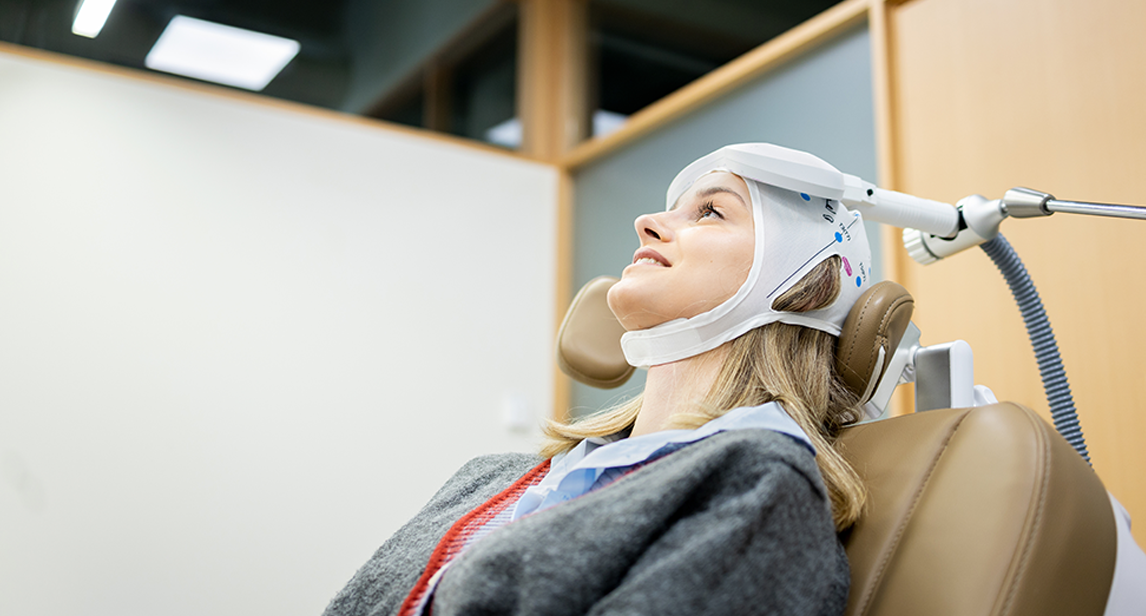
During your first appointment, we perform a mapping process. Clients are taken into our treatment room, seated in a reclining chair, and given earplugs to wear during the session. During a session, clients can expect:

  • While receiving treatment, they will wear the earplugs with the magnetic coil put on their head. The coils’ location differs depending on your initial exam results.
  • The machine is turned on. Clients hear and feel a quick tapping sensation on their scalp. The treatment follows a pattern of tapping lasting a few seconds and then a pause. Clients remain alert throughout the procedure.
  • Treatments are provided daily for five days per week. Each treatment lasts one month, and sessions are 30 minutes long.

Sessions Required for Optimal Results

Clients remain awake during the sessions and can resume normal activities following treatments without requiring anesthesia or medication. They stay comfortably seated in a recliner during treatments. 

Monitoring Progress and Adjusting Treatment

After three weeks, clients receive an additional ten-minute recording to examine changes in their brainwave activity. After ten days, it is objectively measured using sequential recordings. Clinical progress is measured using third-party neurocognitive assessments, instruments, and questionnaires.

Repetitive Transcranial Magnetic Stimulation Therapy

Is rTMS Therapy Right for You?

Who is a Good Candidate for rTMS?

While rTMS is still undergoing ongoing research, clinical trials are being conducted for psychiatric disorders. Clients must meet with study coordinators to review their eligibility criteria to receive treatment. All clients must not have the following to be considered eligible:

  • A history of seizure disorders or epilepsy
  • Ferrous metallic implants in their skull
  • Unstable medical conditions
  • History of substance abuse (past three to six months)
  • Trying to become pregnant, or are pregnant

Contraindications and Risks of rTMS

Less than one percent of clients may experience a self-limiting seizure. Therefore, clients with a history of seizures (aside from ECT) are not eligible to receive treatment. Some side effects can include:

  • Contraction of facial muscles (not painful and don’t continue after stimulation)
  • Involuntary eye blink
  • Light-headedness and dizziness after treatment (quickly resolves)
  • Pain at stimulation site as clients adjust to treatments
  • Mild headache which is resolved within 24 hours or by taking acetaminophen (Tylenol)

Why Choose Neurosync Brain Treatment Centre for Your rTMS Therapy

Experienced and Qualified Professionals

Neurosync Brain Treatment Centre was the first to introduce MeRT therapy to Ontario. We are a physician-led, fully accredited, medically-based treatment facility providing extensive services and specialized programs to treat a variety of issues like addiction, brain injury, anxiety, depression, and other related matters.

Personalized Treatment Plans

Our treatments are customized to our client’s needs. Our qEEG and EKG scans map each person’s brain, allowing us to focus on exact connectivity areas and functional issues. Treatments vary according to our client’s findings.


Superior Client Experience

We prioritize our client’s experience from their initial consultation through to completion. We want to ensure our clients are fully knowledgeable about the procedure and remain comfortable.


Experience the Life-Changing Benefits of rTMS Therapy

To book an appointment to see if you qualify for rTMS therapy, contact us at 416-473-9676 between 9:00 a.m. and 5:00 p.m., Monday through Friday. You can also email us at neurosyncbtc@outlook.com or complete our online form.

rTMS therapy
Ready to Take the Next Step?

More Information

A 2024 review of TMS Treatment for Autism
Studies on rTMS for Autism Treatment

Frequently Asked Questions

Is rTMS therapy safe, and what are the side effects?

rTMS is generally considered a non-invasive treatment with mostly mild, temporary side effects when provided under appropriate medical supervision.

At NeuroSync Brain Centre, we assess each patient before treatment to identify potential risks or contraindications. Common side effects can include scalp discomfort, headache, tingling, or temporary sensitivity at the treatment site. These effects often lessen as treatment continues. Serious complications, such as seizures, are uncommon but possible, which is why clinical screening and physician oversight are important. Patients considering rTMS Therapy in Vaughan receive information about expected side effects, safety precautions, and their individualized treatment plan before sessions begin.

How long does rTMS treatment take, and how many sessions will I need?

An individual rTMS session typically lasts between 20 and 40 minutes, while the total number of sessions depends on your condition and treatment plan.

rTMS is usually provided as a series of appointments rather than a single treatment. Many protocols involve sessions several days per week over several weeks, although frequency and duration can vary based on the condition being treated and how you respond. At NeuroSync Brain Centre, we review your medical history and treatment goals before recommending a schedule. If you are exploring rTMS Therapy in Vaughan, our clinical team will explain your expected appointment length, treatment frequency, and overall course before you begin.

How effective is rTMS therapy in Vaughan?

The effectiveness of rTMS varies by condition, individual health factors, and how each person responds to treatment.

rTMS has been studied most extensively for major depressive disorder, particularly when symptoms have not improved sufficiently with other treatments. It is also being investigated and used in selected clinical settings for other neurological and mental health concerns. We do not promise the same outcome for every patient because responses can differ considerably. At NeuroSync Brain Centre, we evaluate your history and treatment needs before recommending rTMS Therapy in Vaughan. Our goal is to provide a medically supervised treatment plan with realistic expectations and ongoing clinical review.

Who is eligible for rTMS therapy in Vaughan?

Eligibility for rTMS is determined through an individual clinical assessment that considers your diagnosis, medical history, medications, and potential contraindications.

rTMS may be considered for adults with depression and certain other neurological or mental health concerns, depending on their circumstances. However, it is not automatically suitable for everyone. Particular attention may be needed for people with a history of seizures or certain implanted metallic or electronic medical devices. At NeuroSync Brain Centre, our physician-led team reviews these factors before recommending treatment. Patients interested in rTMS Therapy in Vaughan receive a personalized assessment so we can determine whether treatment is appropriate and discuss available alternatives when necessary.

Can I continue taking my medication during rTMS treatment?

Many patients can continue taking prescribed medication during rTMS treatment, but medication decisions should always be reviewed with the treating physician.

We ask patients to provide a complete and current list of prescription medications, over-the-counter products, and supplements before treatment begins. Some medications can affect seizure threshold or influence how treatment is planned, so changes should never be made without medical guidance. In many cases, rTMS is used alongside an existing treatment plan rather than replacing medication immediately. Before starting rTMS Therapy in Vaughan, our clinical team reviews your medications and health history and explains whether any adjustments or additional monitoring may be appropriate.

Testimonials

Quotation icon

Glad I found out about MeRT and even more grateful that it’s in Ontario! Couldn't be more thankful for the team at Neurosync, they took time to explain to me and my husband about Mert therapy and we decided to do the 6 week recommended. I was so amazed that my son who is 6 and non-verbal made such great improvements even beyond the 6 week period!

A

Anita G

5.0 Google icon
★★★★★
Quotation icon

Awesome team and super friendly! Will return for myself next year!

J

John Doe

5.0 Google icon
★★★★★
Quotation icon

The care and attention we received at Neurosync has been outstanding. I highly recommend this place to anyone considering therapy!

E

Emily R

5.0 Google icon
★★★★★
Bubble icon
Bubble icon
Bubble icon
Triangle icon
Triangle icon
Triangle icon
Triangle icon
Bubble icon
Bubble icon
Bubble icon

Book an Appointment

Please complete the details below and then click on Submit and we’ll be in contact


    About Us
    We help our clients archive their dreams.
    We make Braincare™ technologies more accessible, more understandable, more viable, and more affordable.
    Instagram Facebook Envelope

    Working Hours

    Monday – Friday: 9.00 AM – 5.00 PM
    Saturday & Sunday: Closed

    Email: neurosyncbtc@outlook.com

    Phone:  905-758-9885,  +1-905-758-9885
    Explore
    Home
    About Us
    Services
    MeRT For Depression
    MeRT For Brain Trauma
    rTMS Therapy
    Direct IV Ozone Treatment
    Ozone Therapy
    About MeRT
    Autism
    How It Works
    Blog
    Contact
    Sitemap
    Address
    3530 Rutherford Road, Unit 76.
    Woodbridge. ON. L4L 1A6
    English
    Español
    한국어
    繁體中文
    Deutsch
    Français
    Vietnamese
    © 2025 Autism Therapy Vaughan - neurosyncbraincentre.ca. All Rights Reserved.
    Powered by TechWyse