Migraines cause debilitating, intense pain, light sensitivity, and nausea and are therefore distinct from headaches. While physicians often prescribe medications for headache pain, these medications don’t provide long-lasting relief. However, we offer hope for sufferers with our effective, non-invasive migraine treatments.
Transcranial Magnetic Stimulation (TMS) and non-invasive brain stimulation help decrease your migraine’s intensity and frequency. This treatment is useful when traditional methods aren’t working.
Migraines are caused by electrical and chemical activity in the brain and affect 14% of Canadians. When a person is experiencing a migraine, different areas of the brain become activated in a cascade of events. It begins with the release of inflammatory molecules close to the nerves inside your skull.
The pain associated with migraines goes beyond a mere headache. People experiencing a migraine have sensitivity to sound, smell, movement, and light. The individual may also experience brain fog, nausea and/or vomiting, neck pain, and dizziness. Intervals between migraine attacks can produce hypersensitivity to sensations, and the brain may process serotonin differently.
Migraines cause throbbing, intense head pain. They experience a range of symptoms, including vomiting, nausea, and light- and sound-sensitivity. Pain may last from a few hours to days, making daily life challenging.
MeRT is a customized form of Transcranial Magnetic Stimulation (TMS) that targets areas of the brain associated with migraine and other headache disorders. Quantitative EEG/qEEG maps brainwave activity that professionals can use to tailor treatment to areas in the brain responsible for migraines/headaches to provide relief.
An EEG/qEEG is administered to patients, allowing medical staff to identify patterns of dysfunction and diagnose various brain disorders. A qEEG (quantitative electroencephalogram) provides a map that guides professionals to a treatment plan customized to the individual’s needs.
Once your healthcare provider receives your customized plan, they begin with TMS therapy. TMS delivers electromagnetic impulses to your brain, which stimulate nerve cells. For those who experience migraines, it targets the outer layer of the brain (cortex) to regulate abnormal activity.
The treatment is provided in a clinical setting, with a customized approach based on your EEG results. It works without injections, drugs, or surgery, making it non-invasive.
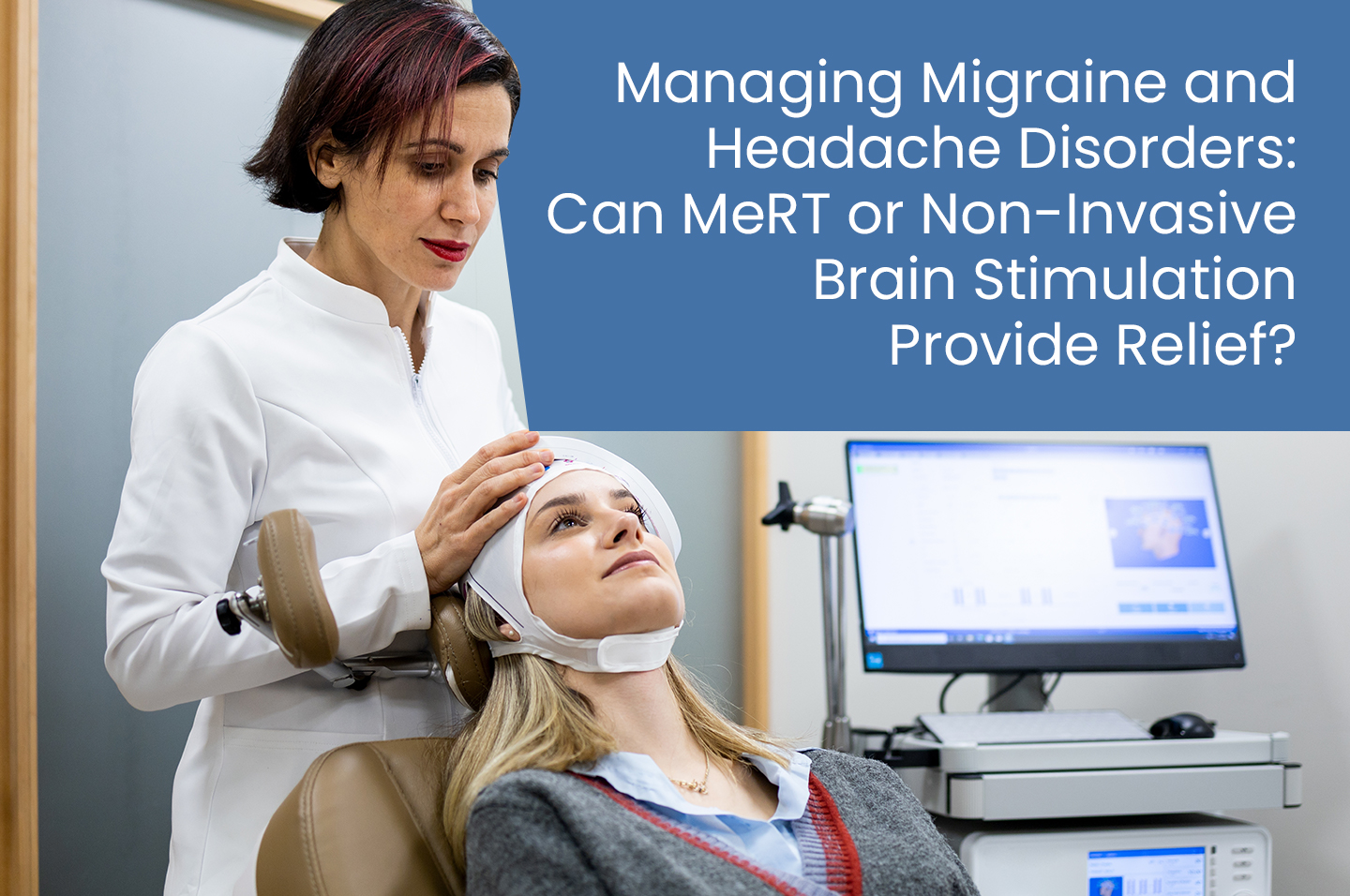
Treatment begins by placing electromagnetic coils against your scalp that generate magnetic impulses. These impulses are responsible for targeting areas of your brain identified with headache generation and pain processing. Its goal is to reduce the severity and frequency of migraine attacks.
TMS has already received recognition for treating obsessive-compulsive disorders, major depressive disorders, autism, post-traumatic stress disorder, chronic pain, traumatic brain injury, and smoking cessation. It is FDA-approved to treat migraines.
A 2021 study found that TMS reduced the number of migraines and their severity. Additionally, a 2022 study found that TMS reduced migraine days to 8 per month, providing significant relief.
It has also shown promise for those experiencing migraine headaches with/without aura and is effective in treating various age groups.
There is no preparation before sessions. You may be asked to remove metallic accessories or jewelry to avoid interference with magnetic materials. Patients sit in a comfortable chair, and your technician will answer any questions or concerns.
During treatment, a technician will provide earplugs or other hearing protection. The reasoning is that the magnet produces a clicking sound like MRI machines, which may be loud enough to warrant protection.
Magnetic coils are placed over a specific area of the head. Placement depends on what is being treated. The first session involves brain mapping, during which the optimal area and intensity of magnetic pulses are determined to make treatment comfortable and effective.
Patients may experience a tapping sensation in their scalp as pulses activate nerve cells in the brain. The strength may gradually increase, and you may experience involuntary twitches or slight movements in the thumbs or hands. It is a normal response and helps the technician find the correct stimulation level.
Treatment involves repeated electrical pulses in a particular pattern. Audible clicking noises are noticeable as the magnet goes on and off. Additionally, there are sometimes short pauses between pulses to prevent the machine from overheating. The sessions range from 30 to 60 minutes.
There is no recovery time involved, and patients remain alert throughout sessions. You return to your daily routine and drive home afterwards. There may be mild side effects (scalp discomfort), but they quickly resolve.
Treatment spans multiple sessions over several weeks. Additional sessions are similar to the first, although the setting may be adjusted based on your responses. Its goal is to fine-tune the stimulation to maximize effectiveness while minimizing discomfort.
If you experience migraine discomfort and traditional methods aren’t offering relief, then MeRT may provide a solution.
At Neurosync Brain Treatment Centre, we offer migraine treatments in a discreet and comfortable clinic. Our compassionate team will help you find the right treatment targeted to your specific EEG results. We have helped numerous patients manage their migraines and improve their quality of life.
Book your appointment with us today by calling 365-799-8438, Monday to Friday, between 9:00 a.m. and 5:00 p.m. You can also email us at neurosyncbtc@outlook.com or contact us here.